Application Modernization Approach
AI-powered application modernization built on a requirements-first methodology
THE STARTING POINT
Most organisations spend the majority of their IT budgets keeping legacy systems alive, leaving little for building new capabilities.
Link Consulting’s Application Modernization Approach (AMA) changes this equation. Although it started as an approach to modernizing a single application, it is also unique in simplifying the application portfolio and in simplifying and unifying IT processes. All of this results in a more agile organisation, able to do more, faster and with fewer resources.
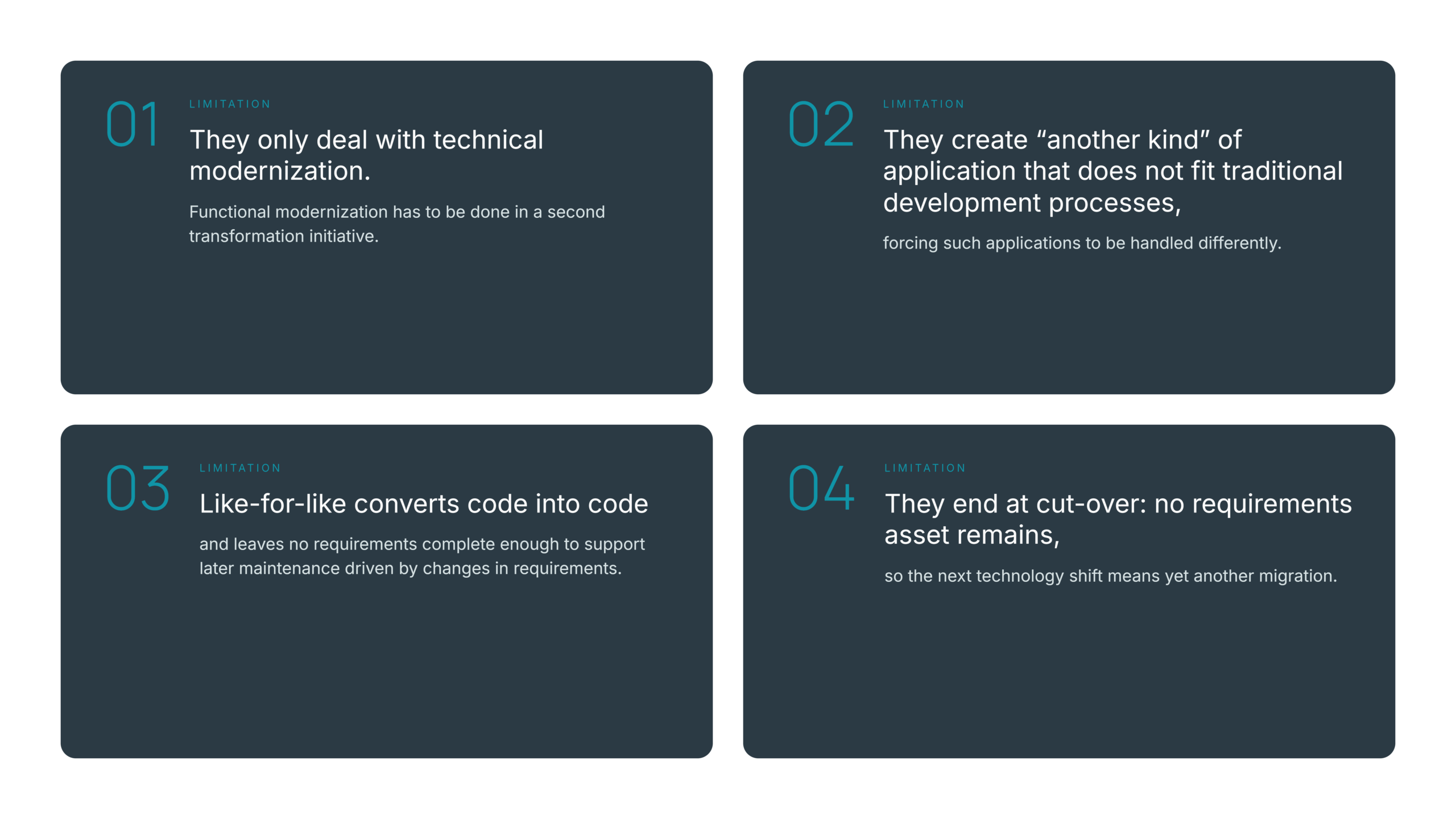
CURRENT MODERNIZATION APPROACHES ADOPT A LIKE-FOR-LIKE STRATEGY.
THE FOUR CHALLENGES
What AMA sets out to answer
CHALLENGE 01
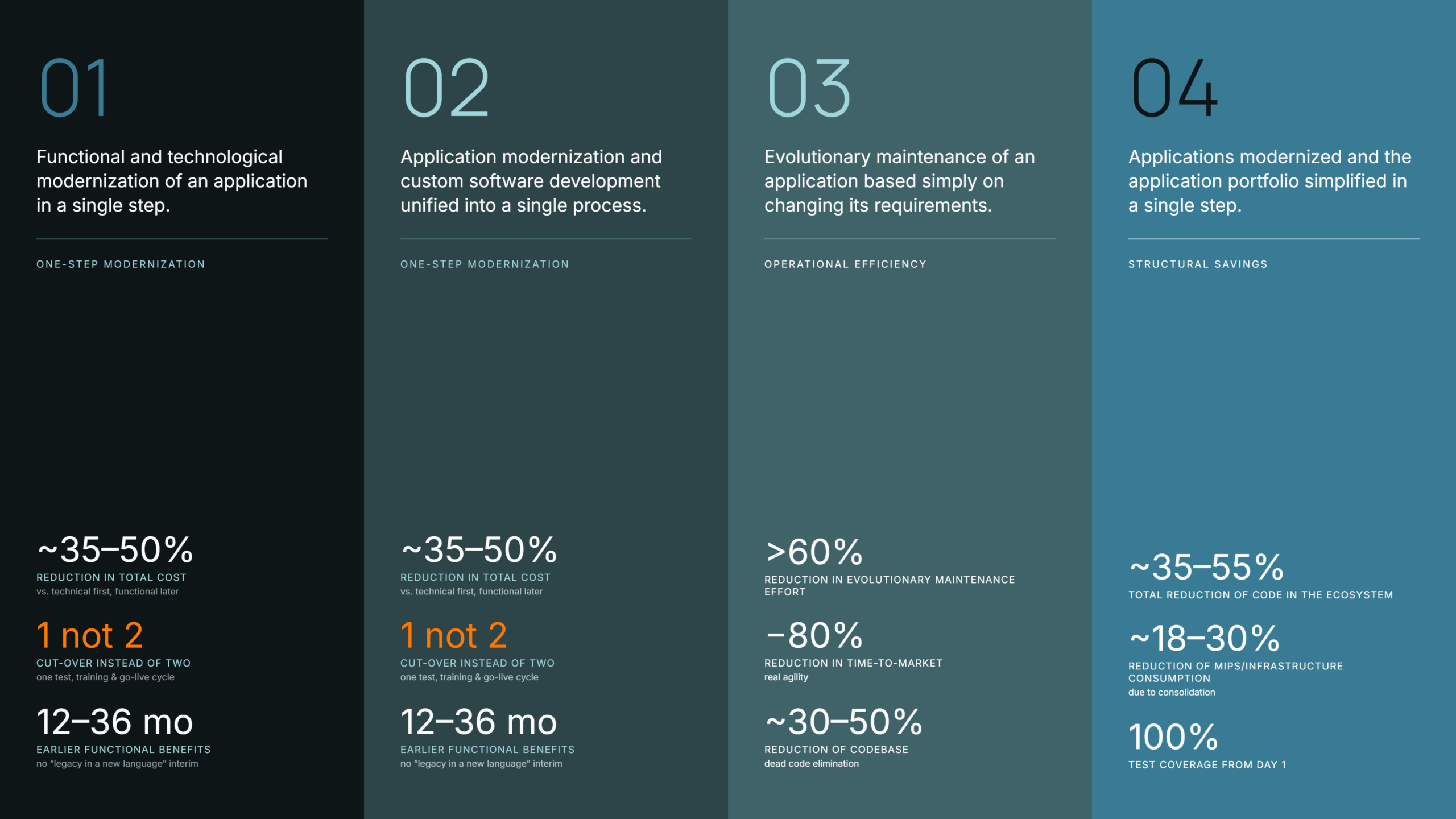
How to enable functional and technological modernization of an application in a single step?
CHALLENGE 02
How to unify application modernization and custom software development into a single process?
CHALLENGE 03
How to enable evolutionary maintenance of an application based simply on changing its requirements?
CHALLENGE 04
How to modernize applications and simplify the application portfolio in a single step?
WHY AMA IS DIFFERENT
Code generation is always driven by requirements
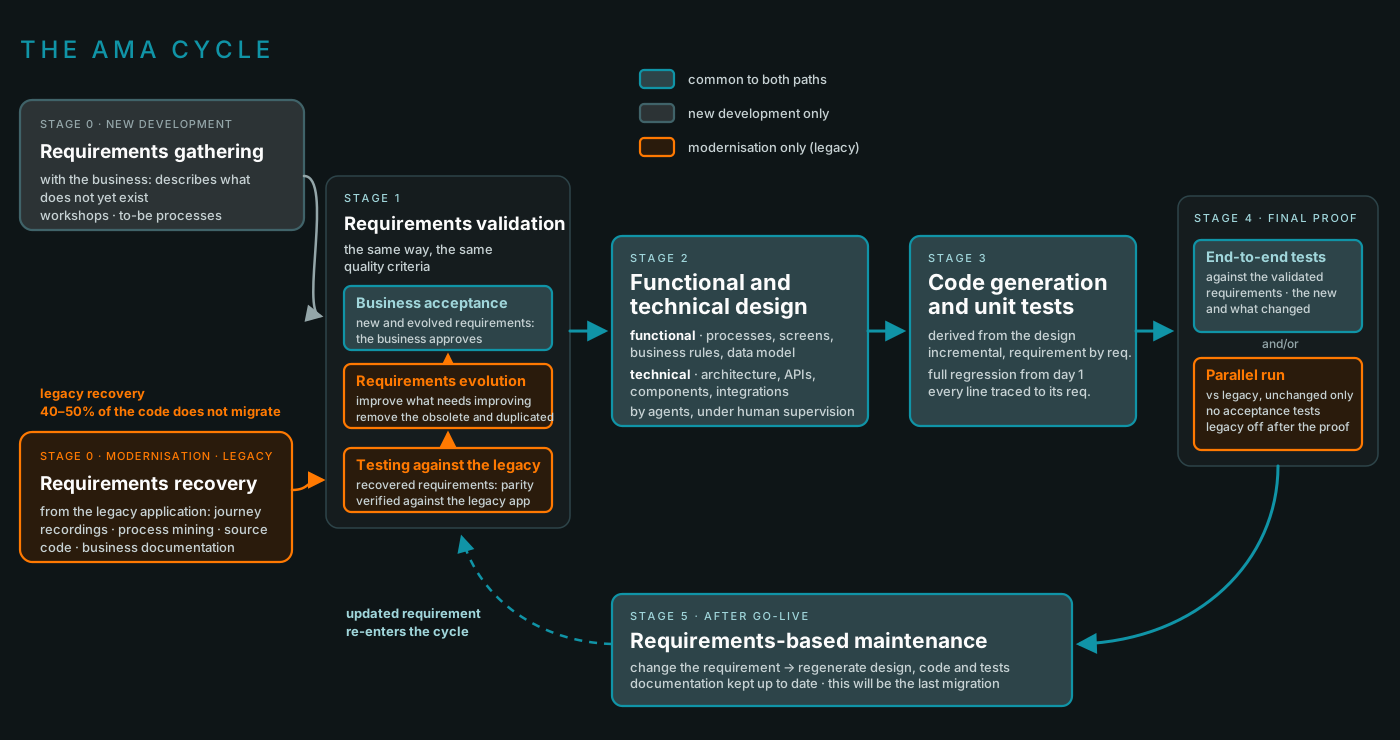
Whether we are developing new applications or modernizing legacy ones, the process is the same.
We recover the requirements of the legacy application from its source code and from recordings of the application in use — the latter being a simple and effective way to identify what is still used and what no longer is.
We test the recovered requirements against the legacy application and, on that validated baseline, we can evolve the requirements.
We then generate the application from the requirements and run the normal test cycle: unit and end-to-end tests. For the features that did not change or evolve from the legacy application, we can also run the new application in parallel with the legacy one to attest its correctness.
Because the application was generated from the requirements, its evolutionary maintenance is also done by changing the requirements.
What changes?
Four outcomes, in a single step
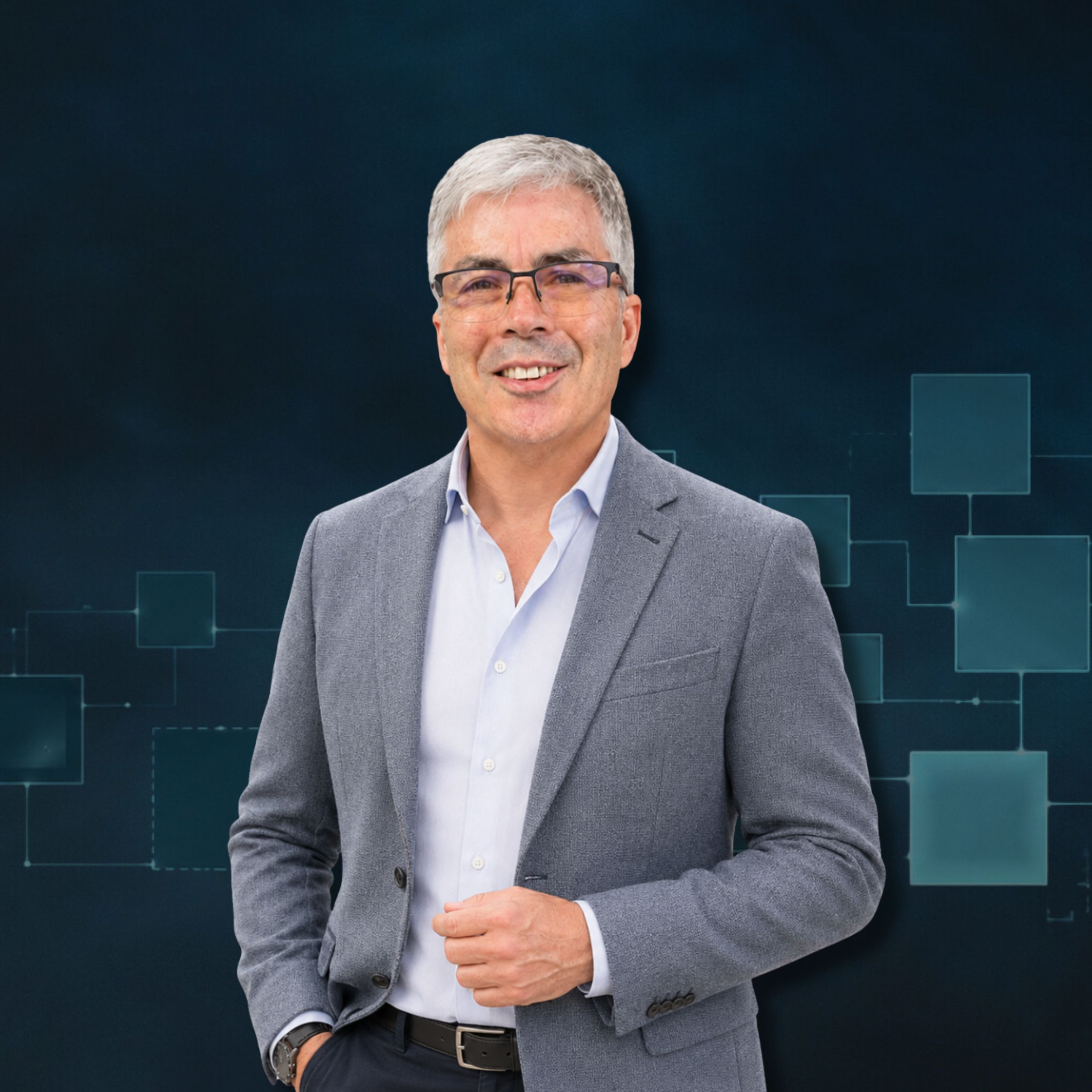
"Those who master Requirements will master Agility."
 Pedro Sousa
Head of Enterprise Architecture & Portfolio Modernization
Pedro Sousa
Head of Enterprise Architecture & Portfolio Modernization
HOW WE CAN HELP
AI-Driven Modernization Capabilities

Requirements first, with traceability that outlives the migration
Requirements are validated with the business as a mandatory gate, then turned into architecture, code and tests — with requirement-to-code traceability kept alive after go-live.
Functional modernization, not just technical
Dead code, unused and duplicated features add up to 40–50% of the legacy codebase. AMA finds it by observing how the application is actually used and lets the business decide what survives.
Modernization and portfolio consolidation in a single step
AMA merges the requirements of several legacy applications into one target application — fewer applications, far fewer integrations, less infrastructure to pay for.
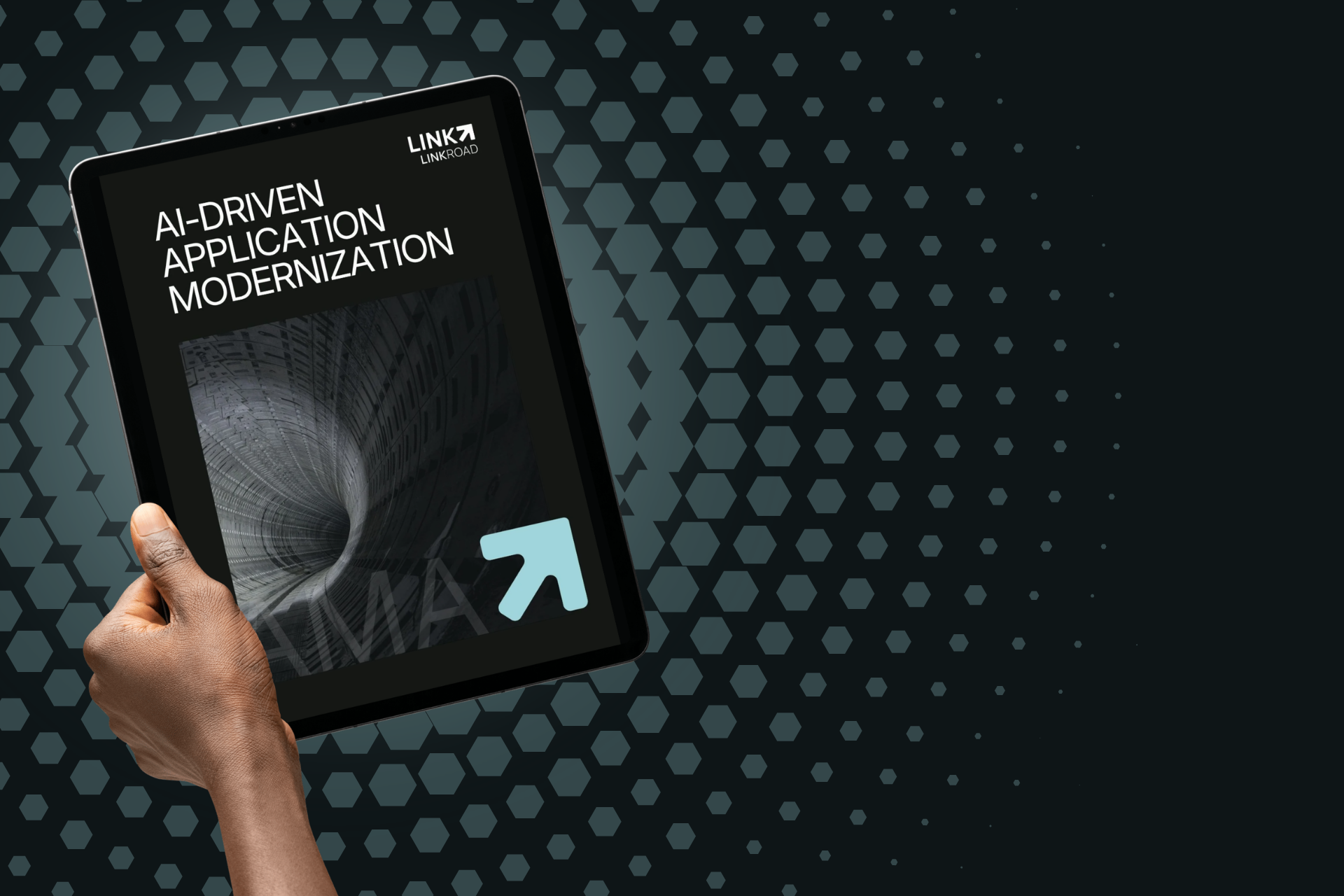
One-Pager
Do not migrate the past. Let’s build the future.
See how AI-powered modernization helps organizations evolve faster.
Download the one-pager
INSIGHTS & RESOURCES
Thinking on Application Modernization
Articles
What If This Were Your Application’s Last Migration?
Modernize or build from scratch? I stopped seeing them as two separate disciplines a long time ago. My first information systems reengineering project was in…
Articles
From Application Migration to Portfolio Transformation
Why is modern technology not enough when organizations continue to rebuild yesterday's problems Most application modernization initiatives start with the wrong objective. They focus on…